Documentation & cover
Insuring designer handbags in Australia
Insuring a luxury collection well comes down to two unglamorous things: accurate values and the paperwork to back them up.
Updated 6 August 2026
How luxury items are usually covered
In Australia, valuable handbags are typically covered either under a home-and-contents policy, sometimes needing to be individually specified above a certain limit, or under standalone valuables cover. The right structure depends on your insurer, your policy limits, and the total value at stake.
This is general information, not insurance advice. Your insurer or a licensed broker can tell you exactly how a specific piece should be scheduled and what limits apply. loupe is not an insurer and does not arrange cover.
What insurers ask for
Whatever the structure, cover works best when each piece has clear records: proof of purchase or a receipt, photographs, a description of the item and its condition, and a current value. If something is ever lost, stolen or damaged, that evidence is what turns a stressful conversation into a straightforward one.
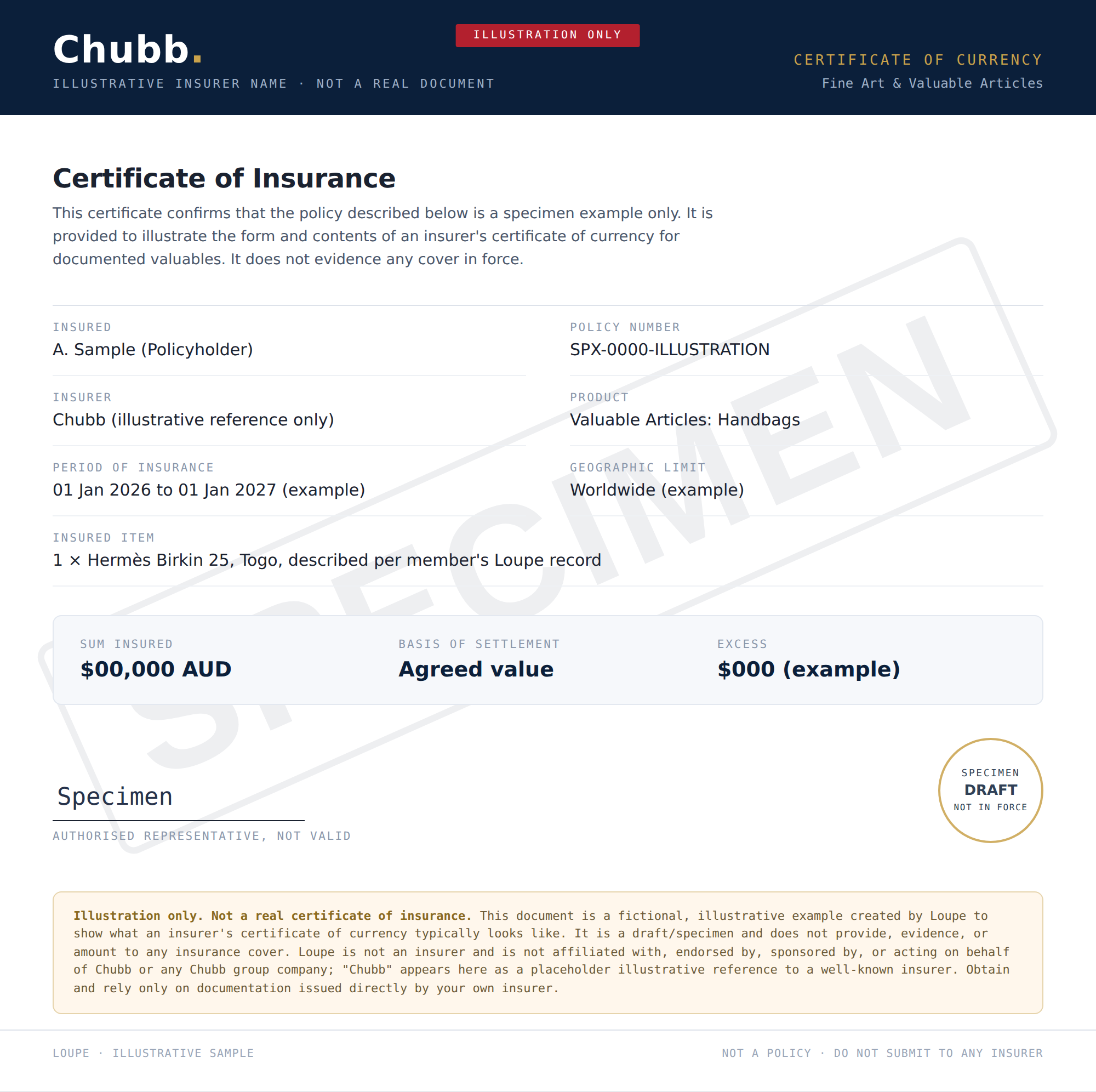
Once a piece is scheduled, an insurer typically issues a certificate of currency confirming the cover. Below is an illustrative example of what one looks like, so you know what to expect. It is a specimen only, not a real policy.
Values also drift. A piece scheduled at its purchase price years ago may now be under-insured if the market has moved, or you may be over-paying to insure a figure that no longer reflects reality. Reviewing values periodically keeps cover aligned with what your collection is actually worth.
Keeping the record current without the busywork
The practical goal is simple: for every piece, be able to produce a photo, a receipt or proof of purchase, and a defensible current value on demand. Keeping that in one place, rather than scattered across drawers and camera rolls, is most of the battle.
loupe keeps per-piece documentation together and maintains an ongoing market-value estimate for each item, then generates a tidy, dated summary you can share with an insurer or broker. It is a market-value estimate and documentation record, not a certified appraisal, and it is a companion to your insurer, not a replacement for them.
Common questions
- Can I use a loupe report for insurance?
- You can use loupe’s documentation and market-value estimate to have an organised, current picture of your collection to discuss with your insurer or broker. Whether a certified appraisal is also required depends on your insurer and the item; loupe provides an estimate, not a certified appraisal, and is not an insurer.
- How often should I update the values I insure for?
- Because resale markets move, it is worth reviewing values periodically rather than relying on a purchase price from years ago. loupe re-estimates pieces on an ongoing basis and flags when a documented value looks stale.
- Does loupe arrange or sell insurance?
- No. loupe is not an insurer and does not arrange cover. It helps you keep accurate values and documentation so your conversations with a licensed insurer or broker are easier.
loupe provides a market-value estimate, not a certified appraisal or financial advice, and is not an insurer. This guide is general information and may not reflect your circumstances.
Keep every piece worth knowing.
An ongoing market-value estimate and complete documentation for your whole collection.